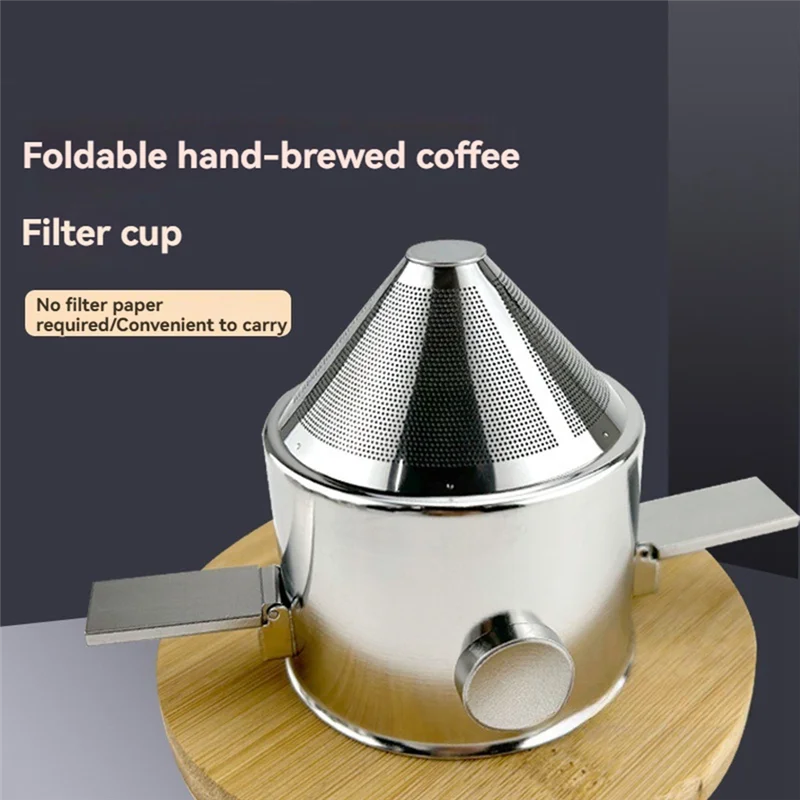
Quick answer: For a reusable pour over coffee dripper for camping, this Ridgebrew mesh cone is 130g of 18/8 (304-grade) stainless steel. It seats on wide-mouth mugs and pots up to 4 inches in diameter, needs no paper filter, and is built for campers and backpackers who want a zero-waste brew that holds its shape at altitude and in the cold.
Best reusable pour-over dripper for camping and backpacking
If you are looking for the best percolator-style alternative that is actually a pour-over—no paper, no plastic cone, no extra filter stash—this is the field tool. The Ridgebrew dripper is a laser-etched 304 stainless mesh cone with 0.8mm wall thickness. It weighs 130g (4.6 oz), fits vessels up to 4 inches across, and stays food-safe from -40 °F to 800 °F. One piece of gear. Rinse. Pack. Repeat.
Paper filters soak up oils, add pack weight, and fail when wet hands or wind hit mid-pour. Plastic cones have a heat ceiling around boiling water. This dripper keeps cone geometry under load, across temperature swings, and on a frozen morning when everything else in the kit is brittle. Every unit is hand-tested for mesh integrity before it ships.
Who this dripper is for
-
Backpackers on multi-day routes who refuse to carry a stack of paper filters or pack out used ones under Leave No Trace pack-out rules.
-
Basecamp cooks brewing into a wide-mouth mug or small pot for two, then rinsing the mesh for a second round.
-
Van and cabin drinkers who want the same cone at the trailhead and on the kitchen counter—no separate “home” dripper.
-
Zero-waste campers replacing a Hario V60 plastic 02 or a GSI JavaDrip plus consumable paper.
What it is not: an ultralight 45g plastic body. You trade a few ounces for metal that does not warp, crack, or need a resupply of filters. For most weekend and week-long trips, that trade is the point.
Product specifications
| Spec |
Detail |
| SKU |
RB-POUROVER-DRIPPER |
| Type |
Brew gear — reusable pour-over cone |
| Weight |
130g (4.6 oz) |
| Material |
18/8 (304-grade) stainless steel, 0.8mm wall thickness |
| Mesh |
Laser-etched fine-mesh cone |
| Compatible vessel diameter |
Up to 4 inches (standard wide-mouth mugs and pots) |
| Temperature range |
-40 °F to 800 °F |
| Food-contact standard |
Food-grade 304 stainless steel |
| Material spec |
Integrity verified against ASTM A240 (304 stainless sheet) |
| Returns |
30-day returns; defective items replaced |
What is the difference between a stainless mesh dripper and a paper pour-over?
Paper (Hario V60 plastic 02, most collapsible drippers) absorbs oils, needs a new filter every cup, and is waste you must carry out. A stainless mesh cone lets oils through for a fuller cup, filters grounds at a medium-coarse grind, and rinses clean. The difference in the field is logistics: no wet paper in the bear bag, no “we ran out of filters” on day four.
Compared with the GSI Outdoors JavaDrip (~45g plastic, paper required, heat limit around 212 °F) and the Hario V60 Plastic 02 (~90g polypropylene, paper required, heat limit around 230 °F), Ridgebrew is heavier at 130g, all 304 steel, no filter, and stable from -40 °F to 800 °F. Use case: backpacking, basecamp, and daily brew—not gram-shaving ultralight where you accept paper forever.
Fit, capacity, and what you brew into
The folded rim locks onto wide-mouth vessels up to 4 inches in diameter: most camp mugs, Nalgene-style wide mouths, and single-serve pots. Confirm it is seated and stable before you pour. It is a dripper, not a kettle or percolator pot—you still heat water separately to 195–205 °F (Specialty Coffee Association brewing range). At altitude, water boils cooler; pull the kettle just before a rolling boil so extraction does not go sour and thin.
Dose follows SCA-style 1:18: about 55g coffee per liter of water. For a single 350ml cup, that is roughly 19–20g, medium-coarse. Bloom with about twice the coffee weight in water (around 40ml on 20g), wait 30 seconds, then pour slow circles. Total brew time 4–6 minutes. Very fine espresso grinds can pass the mesh—stay medium-coarse for a clean cup.
How to brew in camp
- Heat water to 195–205 °F; at elevation, stop just short of a full boil.
- Grind medium-coarse; ~19–20g for a 350ml mug, or 55g per liter.
- Seat the dripper on a mug or pot up to 4 inches wide; check stability.
- Bloom, then pour in stages until 4–6 minutes total.
- Lift the dripper, tap out grounds, rinse with hot water. Ready for the next cup.
Materials, food safety, and why 304 steel in the backcountry
18/8 (304) stainless with 0.8mm walls is the same family of food-equipment steel specified under ASTM A240. USDA food-safety data treats 304 as structurally stable from -40 °F to 800 °F, so a propane burner nearby or a sub-freezing dawn is not a warping or off-flavor event. The 304 stainless mesh is food-grade. That matters when you cannot swap a failed cone mid-trip.
Do not sit the dripper in a campfire or on a burner as if it were a pot. It is a pour-over tool. Incidental heat from a nearby stove will not degrade 304 steel within that temperature range. Leave No Trace pack-out treats used paper filters as waste; stainless mesh is not waste. Aligns with pack-out principles from the Leave No Trace Center for Outdoor Ethics.
Care, cleaning, and longevity
- Rinse with hot water after every brew. 304 mesh is dishwasher-safe; no special detergents required.
- For oil buildup, soak 10–15 minutes in 1:1 hot water and white vinegar, then rinse thoroughly.
- Skip steel wool and abrasive pads. A soft brush keeps laser-etched apertures true. The wall is 0.8mm and tough; the mesh is precision-formed.
- Returns are accepted within 30 days of delivery for unused items in original packaging, and anything that arrives defective or damaged is replaced. Material integrity is checked against ASTM A240 for 304 sheet.
Packed next to a mug, it does not crush like a plastic V60. Rinse at the stream or the sink. Same cone for the office kettle and the ridge at first light.
Frequently Asked Questions
What mug or pot size does the Ridgebrew pour-over dripper fit?
The folded rim seats on wide-mouth vessels up to 4 inches in diameter—typical camp mugs, Nalgene-style wide mouths, and single-serve pots. Confirm a stable seat before you pour so the cone does not shift mid-bloom.
Does a stainless steel mesh dripper leave grounds in the cup?
The laser-etched fine mesh is meant to hold a medium-coarse grind, which is the right setting for this cone. Espresso-fine powder can pass through; stay medium-coarse and you get a clean cup without paper.
Can I put this dripper on a campfire or propane burner?
No. It is a pour-over, not a pot—heat water in a kettle or cookpot, then pour. 304 stainless is stable to 800 °F, so stray heat from a nearby burner will not warp it, but do not set the cone in flame.
How do I clean a reusable stainless pour-over dripper?
Rinse with hot water after each use; it is dishwasher-safe. For oils, soak 10–15 minutes in equal parts hot water and white vinegar, then rinse. Use a soft brush only—no steel wool—so the laser-etched mesh stays intact.
What is the difference between this dripper and the GSI JavaDrip for backpacking?
GSI’s JavaDrip is roughly 45g lighter but needs paper filters, so consumable weight and pack-out waste grow on a multi-day trip. Ridgebrew is 130g of 304 steel, no paper, and a much wider temperature range for cold mornings and stove-side heat.
Is 304 stainless food-safe for coffee, and does it need special care at altitude?
Food-grade 304 stainless remains stable from -40 °F to 800 °F. Altitude does not change the metal—it only lowers boil temperature—so still target 195–205 °F water and a medium-coarse grind for extraction.